
Central Utility Buildings
Central Utility Buildings, or CUBs, serve as the operational backbone for campuses, industrial facilities, and mission-critical environments. Also referred to as a central utility plant, these centralized buildings house the mechanical, electrical, plumbing, and control infrastructure responsible for delivering dependable cooling, heating, power distribution, and process utility support where uptime, redundancy, and long-term performance are non-negotiable.
Innovative Refrigeration Systems designs and delivers Central Utility Buildings engineered for continuous operation, scalable capacity, and operational resilience. Systems are developed with a plant-first mindset, focusing on equipment arrangement, redundancy strategies, maintainability, prefabrication opportunities, and safe operation across a wide range of load conditions.
Our approach supports facilities that require a single, reliable source of thermal energy and industrial utility infrastructure, while maintaining flexibility to expand, modernize, and adapt over time without disrupting operations.
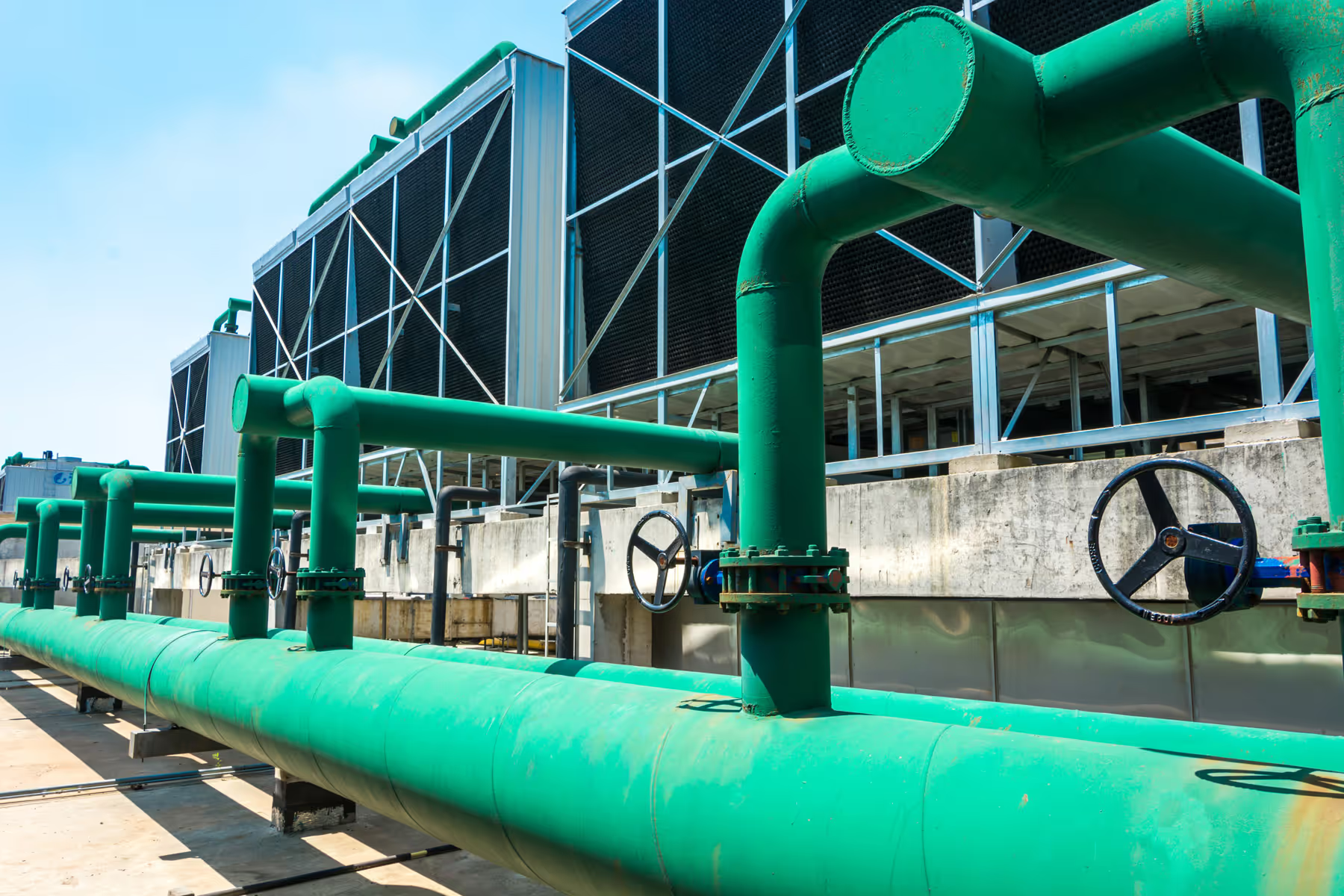
Central Utility Infrastructure Engineered for Long Term Operation
Central Utility Buildings are designed to do more than produce heating and cooling. They centralize the systems that keep critical facilities running, including ammonia chillers, chilled water systems, low-temperature brine systems, pumps, boilers, air compressors, electrical service, power distribution, controls, and water treatment.
Innovative focuses on the plant-level engineering decisions that define performance over decades, from equipment access and utility distribution to redundancy, controls integration, and future expansion.
Central Plant Mechanical Systems
High-capacity refrigeration, heating, and chilled water system infrastructure engineered for centralized plants. These systems are designed to support continuous operation, planned maintenance, and efficient distribution of chilled water, brine, or other process utilities throughout the facility.
Redundancy & Resiliency Design
Plant layouts and system architectures designed with N+1, 2N, and other mission-critical redundancy concepts to minimize risk and maintain service during equipment outages or maintenance events.
By separating critical equipment into a dedicated, serviceable utility hub, facilities can reduce disruption to production, process, occupied, or secure spaces while maintaining reliable utility service.
Plant Controls & Automation
Integrated control systems that manage equipment staging, load balancing, redundancy, and fault response to maintain stable operation while optimizing energy use across changing demand profiles.
Controls are coordinated with the full plant design, allowing operators to monitor and manage cooling, utility distribution, and equipment performance from one integrated system.
Scalable Infrastructure & Maintenance Access
Central Utility Buildings are engineered with future capacity, serviceability, and long-term asset management in mind. Equipment spacing, access provisions, utility distribution, and expansion points are planned to support safe maintenance and future load growth without major system disruption.
Pipe bridges, chilled water mains, brine piping, electrical feeds, utility distribution, and controls can all be coordinated as part of a scalable central plant strategy. Centralizing major operating equipment in one dedicated location also helps keep maintenance activity out of sensitive process areas, clean spaces, production environments, and secure facilities.
Modular & Prefabricated Utility Solutions
Where the project allows, Innovative can support modular central utility plant solutions that reduce field labor, improve quality control, and simplify installation. Even on large Central Utility Building projects that require field construction, key components such as chillers, pumps, controls, piping assemblies, and equipment skids can be fabricated in Innovative’s manufacturing environment.
Factory Acceptance Testing allows equipment, pumps, controls, and system sequences to be verified before installation, helping reduce startup risk and streamline commissioning.
Campus & Industrial Applications
Central Utility Buildings support industrial sites, healthcare campuses, higher education, data centers, pharmaceutical manufacturing, food processing, automotive manufacturing, district heating and cooling systems, and large commercial developments where centralized utility infrastructure is critical to operations.
They are especially valuable for facilities requiring chilled water, low-temperature brine, compressed air, boilers, water treatment, power distribution, or other centralized utilities.